Bonfire Night Sausage Gravy
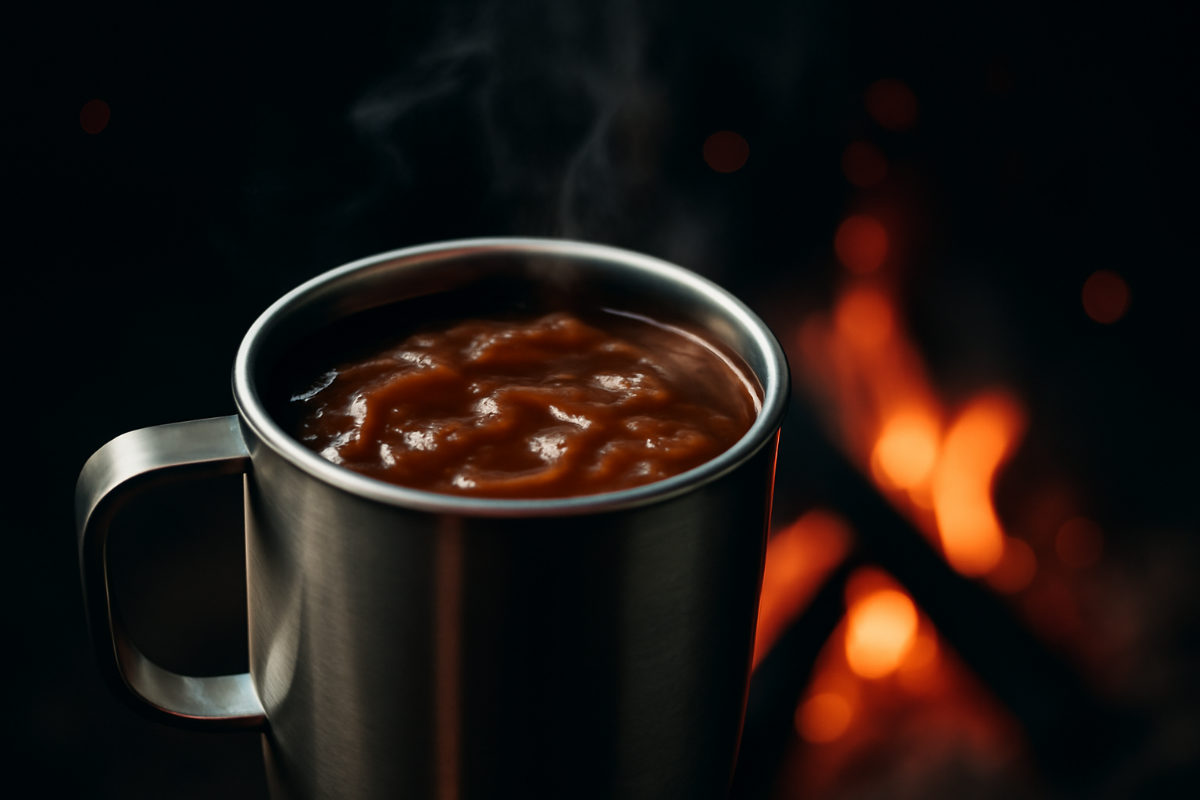
A thick, sticky onion and ale gravy for sausages, built to sit in a flask for an hour and still pour properly at the bonfire.
- Contains meat
- sausages
- bonfire night
- onion gravy
- ale
- Prep
- 10 min
- Cook
- 45 min
- Total
- 55 min
- Serves
- 8
- Difficulty
- Easy
Bonfire night food has to survive being carried outside in the dark. This gravy is made deliberately a bit thicker and a bit sharper than a Sunday one, because it will be poured over a bap or a plate of mash in the cold and it needs to hold its own. It comes out of a flask an hour later still hot and still glossy.
Ingredients
Makes about 900ml, enough for eight baps or plates
Scaled amounts are rounded to something you can actually measure. Season at the end and trust your mouth over the maths.
Kit
- Wide heavy pan
- Wooden spoon
- Wide mouthed vacuum flask
Method
Melt the butter with the oil in a wide heavy pan over a medium low heat. Add the onions and a good pinch of salt, stir to coat, then cover and let them sweat for ten minutes so they collapse and release their water.
Take the lid off, turn the heat up a notch, add the sugar and thyme, and cook for a further twenty minutes, stirring every few minutes and scraping the brown film off the base each time. You are after deep gold, floppy and sweet, not pale and squeaky.
Scatter over the flour and stir it through the onions until there is no dry flour visible. Cook for two minutes, still stirring, so the flour toasts against the hot pan base rather than sitting raw in the onions.
Pour in the ale in one go. It will foam up and thicken immediately. Keep stirring and scraping and let it reduce for four minutes until the foam has gone and the smell has turned from beery to malty.
Add the hot stock in two additions, stirring each in until smooth. Bring to a simmer and cook for fifteen minutes uncovered, so it thickens properly. You want it noticeably thicker than a roast dinner gravy, thick enough to sit on a sausage rather than run off it.
Stir in the mustard and Worcestershire sauce, then taste. Brown ale carries bitterness, so if it tastes sharp, a second teaspoon of brown sugar balances it better than salt does.
To transport it, fill the flask with boiling water, leave it two minutes, tip it out, then pour the gravy in while it is at a full simmer. Filled hot into a preheated flask it will still be above 63C two hours later, which matters if you are feeding a crowd outside.
Tips worth knowing
- Choose a malty brown ale or a mild rather than an IPA. Hop bitterness concentrates as the gravy reduces and turns a good gravy into an ashtray.
- Cook the sausages separately and add them to the gravy at the end rather than frying them in it. Sausage fat renders into the gravy and makes it greasy if they cook in it too long.
- Slice the onions with the grain, root to tip, not across. They hold their shape through forty minutes of cooking instead of turning to mush.
- If you are making this outdoors on a camping stove, do the onions at home and take the ale and stock with you. The onion stage is the bit that needs a proper hob.
Change it up
- Leave out the ale and use 330ml of extra beef stock plus two teaspoons of black treacle and a tablespoon of malt vinegar for the same dark sweet sour balance.
- Add a peeled and grated apple with the onions for a sweeter gravy that suits pork sausages with sage in them.
- Use vegetable stock, a vegan ale and oil in place of butter, and serve it over vegetarian sausages. Marmite instead of Worcestershire sauce keeps it vegan.
Keeping and reheating
Keeps four days in the fridge and freezes for three months, though the onions soften further on thawing. Cool it fast in a shallow tray rather than leaving it in the flask, since a flask keeps food warm for hours, which is the last thing you want once you are trying to chill it.
Questions people ask
How do I keep gravy hot outdoors?
A wide mouthed vacuum flask, preheated with boiling water and filled with gravy at a full simmer, holds serving temperature for a couple of hours. Fill it right to the top, since air space is what lets it cool. Do not use it to reheat gravy, only to hold gravy that is already piping hot.
Why is my onion gravy bitter?
Either the ale was too hoppy or the onions caught and burnt rather than caramelised. Burnt onion is bitter all the way through and cannot be rescued, so keep the heat moderate and scrape the base often. A teaspoon of sugar fixes mild bitterness, not scorching.
Can I make sausage gravy in advance?
Yes, it is better the next day once the onion and ale have settled together. Cool it quickly, chill it, and reheat it to a rolling boil in a pan. It thickens in the fridge so have a little stock ready to loosen it.