Christmas Ham Gravy
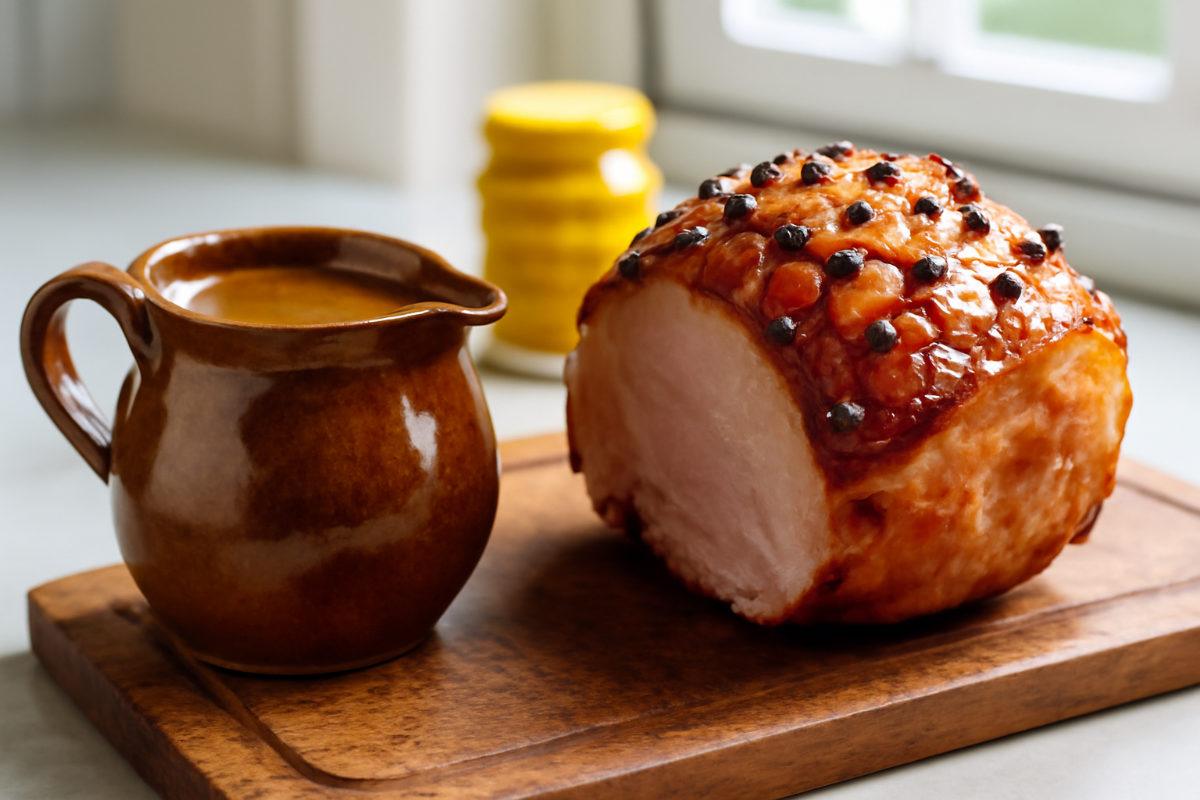
A cider and mustard gravy made from a glazed gammon, using the sticky roasting tin but not the salty cooking liquor.
- Contains meat
- ham
- gammon
- christmas
- cider
- Prep
- 10 min
- Cook
- 25 min
- Total
- 35 min
- Serves
- 8
- Difficulty
- Easy
Roast gammon leaves behind one of the best roasting tins of the year, all burnt honey and clove. The trap is the poaching liquor, which is far too salty to use as stock and ruins the gravy for people every Christmas. Use cider and unsalted stock instead and let the tin do the work.
Ingredients
Makes about 700ml, enough for eight plates
Scaled amounts are rounded to something you can actually measure. Season at the end and trust your mouth over the maths.
Kit
- Roasting tin
- Whisk
- Fine sieve
Method
Lift the glazed gammon onto a board and let it rest for twenty minutes, loosely covered. Do not pour the poaching liquor into the tin, however tempting. It is brine and it will make the gravy inedible.
Look at the tin. If the glaze has burnt black rather than gone dark amber, scrape the worst of it out and discard it, because burnt sugar is bitter all the way through. Keep everything that is still sticky and brown.
Set the tin over a medium heat, add the butter and the onion and cook for five minutes until soft, stirring so the onion picks up the glaze rather than the glaze burning further.
Stir in the flour and cook it for two minutes. Add the grated apple and stir it through the roux, where it will soften and start to dissolve, giving body without extra flour.
Pour in the cider and whisk hard. It will bubble up and thicken quickly against the sugary tin. Keep scraping until the base is clean, then let it reduce for three minutes so the cider loses its raw sharpness.
Add the stock in two goes, whisking smooth, then simmer for ten minutes until it coats a spoon. Push it through a fine sieve into a clean pan if you want it smooth, or leave the apple and onion in for a rougher country version.
Stir in the mustard off the heat and add the vinegar. Now taste, and taste properly, before you even think about salt. Between the glaze and the tin residue there is usually plenty. Finish with black pepper.
Tips worth knowing
- Taste before salting and then taste again. A ham tin is the saltiest starting point in the whole Christmas kitchen and unsalted stock is not optional here.
- If the gravy has come out too salty anyway, add a peeled raw potato and simmer for ten minutes, then remove it, or simply dilute with more unsalted stock and re-thicken with a little beurre manie.
- Line the tin with a sheet of baking parchment under the ham for the glazing stage. The glaze still caramelises but it is far less likely to burn onto the metal.
- This gravy is excellent cold on a ham sandwich the next day, set to a jelly. Do not waste what is left in the jug.
Change it up
- Swap the cider for 250ml of cloudy apple juice with an extra tablespoon of cider vinegar for an alcohol free version.
- Add a tablespoon of marmalade instead of the apple for a sharper, more bitter orange gravy that suits a clove studded ham.
- Stir in two tablespoons of double cream and a teaspoon of chopped tarragon at the end for a softer sauce to serve with cold ham and jacket potatoes.
Keeping and reheating
Keeps three days in the fridge, cooled quickly in a shallow container, and freezes for three months. It sets firmly and reheats well. Bring it to a rolling boil before serving and loosen with unsalted stock rather than water so the seasoning stays balanced.
Questions people ask
Can I use the ham cooking water for gravy?
Almost never. Gammon is cured in brine and the poaching liquid comes out salty enough to be unusable. If you soaked the joint overnight and changed the water twice, you can use a small amount, perhaps a fifth of the total liquid, but taste it first.
What gravy goes with Christmas ham?
Something with acidity and mustard in it, because the ham is sweet from the glaze and salty from the cure. Cider, apple and English mustard hit all three. Avoid a rich beef gravy, it just piles richness onto richness.
My gammon glaze burnt onto the tin, is the gravy ruined?
Not necessarily. Scrape out and throw away the parts that are properly black, since burnt sugar is bitter and will not cook out, and keep the dark amber bits. If the whole tin is black, start the gravy in a clean pan with butter and onion and accept a slightly lighter result.