Regional British and Irish Gravies
Yorkshire Gravy for Pudding First
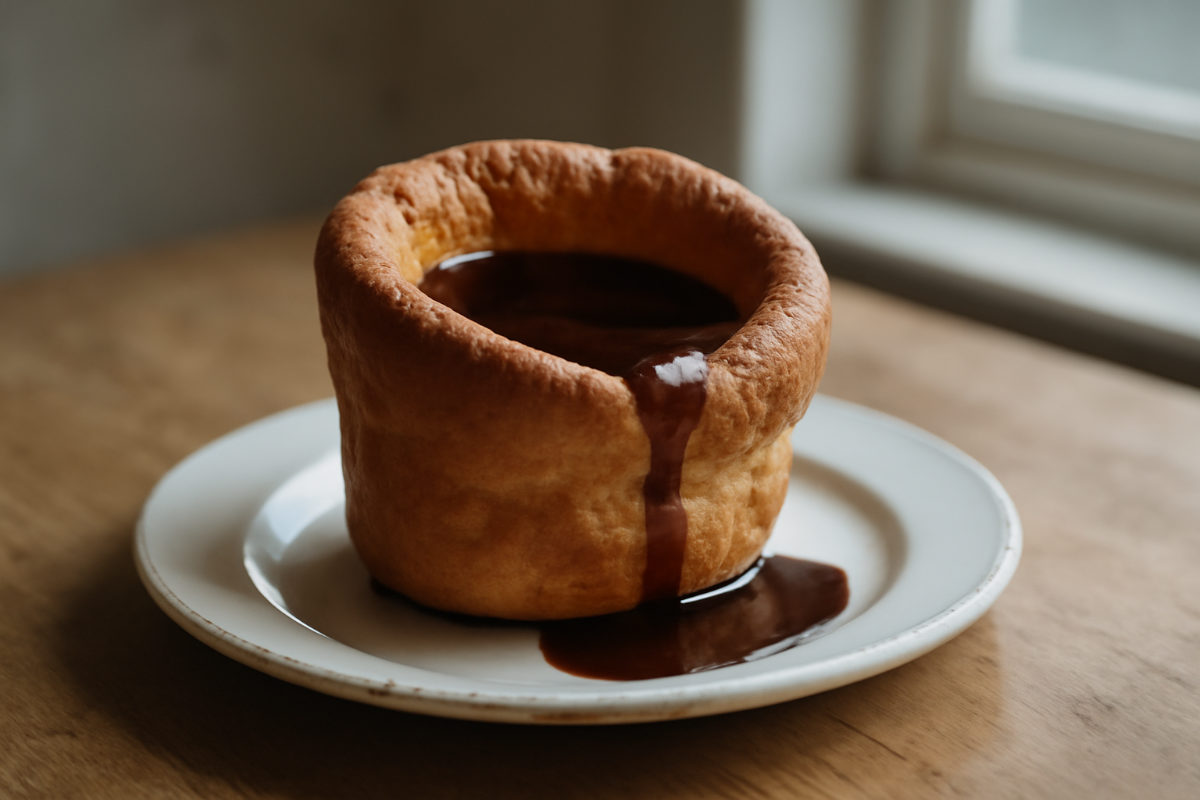
A thin, savoury onion gravy meant to be poured into a Yorkshire pudding and eaten before the meat, in the old Yorkshire way of filling people up cheaply.
- Contains meat
- yorkshire
- yorkshire pudding
- thin gravy
- first course
- onion
- Prep
- 10 min
- Cook
- 35 min
- Total
- 45 min
- Serves
- 6
- Difficulty
- Easy
In parts of Yorkshire the pudding came first, on its own, swimming in gravy, and the idea was simple enough: fill the family up before the expensive bit arrived. That means the gravy needs to be different from a roast gravy. Thinner, so it pools in the pudding rather than sitting on it, and savoury enough to carry a course on its own.
Ingredients
Makes about 700ml, generous for six puddings
Scaled amounts are rounded to something you can actually measure. Season at the end and trust your mouth over the maths.
Kit
- Saucepan
- Whisk
- Sieve
Method
Melt the dripping in a saucepan over a medium heat and add the onions with a pinch of salt. Cook for 20 minutes, stirring often, until soft and a deep even gold. The onions are carrying this gravy on their own, so give them the time.
Sprinkle in the single tablespoon of flour and stir for 90 seconds. One tablespoon into nearly a litre of stock gives you a gravy that pours like a thin soup rather than clings, which is exactly what you want here.
Add a ladle of the hot stock and whisk it smooth, then pour in the rest along with the bay leaf. Bring to a simmer.
Simmer uncovered for 12 to 15 minutes. It will reduce a little and darken but it should still run freely off a spoon in a stream, not in drips.
Strain it if you like a clean gravy for pouring into puddings, or leave the onions in if you want more to chew on. Traditionally it went in with the onions.
Stir in the Worcestershire sauce and mushroom ketchup, then season hard with black pepper and check the salt. It needs to taste strong on its own, because there is no meat on the plate to lean on.
Tips worth knowing
- Serve the puddings hot from the oven and pour the gravy in at the table. A pudding that has sat in gravy for five minutes collapses into paste.
- Make the puddings large and deep rather than flat, so they hold a proper puddle. A four hole Yorkshire tin is better than a bun tin for this.
- If you are roasting anyway, use the tin the beef came out of and deglaze it with the first ladle of stock. That is where the flavour is.
- Taste it colder than you think. Gravy tastes saltier hot, and the pudding soaks up a lot, so it should read almost too seasoned in the pan.
Change it up
- Add a splash of dark ale with the stock for a maltier gravy that suits a beef dinner following on.
- Use a strong vegetable stock and a teaspoon of Marmite for a meat free version, since the pudding course was always the cheap course anyway.
- Reduce it by a further third and it becomes a decent gravy for the roast itself, so you can make one pan do both jobs.
Keeping and reheating
Keeps 4 days in the fridge and freezes for 3 months. It thickens on standing because of the reduced onion, so loosen with stock when reheating rather than letting it turn into a sauce.
Questions people ask
Why do Yorkshire people eat Yorkshire pudding first?
It was a way of filling everyone up on the cheapest part of the meal before the meat was carved, and in many families it is still done that way. It is associated with Yorkshire broadly rather than one town, and plenty of households never did it at all.
Should gravy for Yorkshire puddings be thick or thin?
Thin. A thick gravy sits on the surface and the pudding stays dry underneath, while a thinner gravy runs into the well and soaks into the soft base. Use about a third as much flour as you would for roast gravy.
Can I make this gravy without meat dripping?
Yes, use butter or rapeseed oil. You lose a bit of roast flavour, so lean harder on the Worcestershire sauce and mushroom ketchup to make up the difference.