Regional British and Irish Gravies
Welsh Cawl Gravy
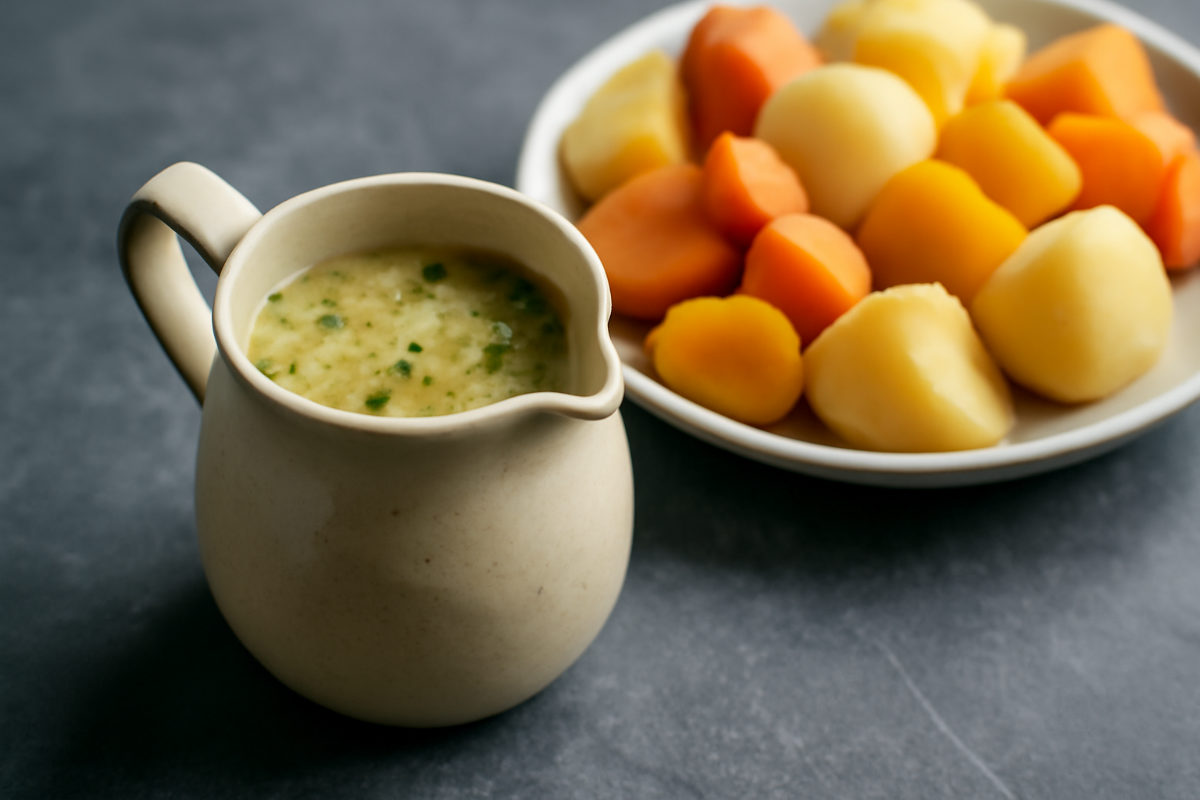
Lamb and leek gravy built from the broth of a cawl, lightly thickened so it becomes a sauce for the meat and root veg rather than a soup.
- Contains meat
- welsh
- lamb
- leek
- cawl
- one pot
- Prep
- 15 min
- Cook
- 40 min
- Total
- 55 min
- Serves
- 6
- Difficulty
- Easy
Cawl is the Welsh national dish and it changes house to house, but the constant is lamb, leeks and root vegetables cooked slowly in one pot. This turns that broth into a gravy so you can serve the meat and veg on a plate instead of in a bowl. It is associated with west Wales and Carmarthenshire in particular, though every county will tell you their version is right.
Ingredients
Makes about 600ml, enough for six plates
Scaled amounts are rounded to something you can actually measure. Season at the end and trust your mouth over the maths.
Kit
- Large saucepan
- Sieve
- Whisk
Method
If you are working from a cawl, ladle off 800ml of the broth and chill it for 20 minutes so the fat rises and sets enough to lift off with a spoon. A little fat is good, a thick cap of it is not.
Melt the butter in a saucepan over a medium low heat and cook the sliced leek whites with a pinch of salt for 8 minutes until completely soft and sweet. Do not let them brown, this gravy should stay pale and clean tasting.
Add the grated swede and cook for another 5 minutes, stirring, until it loses its raw crunch. Grating rather than dicing means it half melts into the gravy and thickens it naturally.
Scatter over the flour and stir for 2 minutes until it coats everything and smells biscuity.
Add the warm broth a third at a time, whisking each addition until smooth before the next. Bring to a simmer.
Cook gently for 15 minutes, stirring now and then. The swede will soften completely and the gravy will thicken to something between a broth and a sauce. It should just coat a spoon, not cling to it, because cawl gravy is meant to be pourable.
Stir in the cider vinegar and the parsley, then season with salt and white pepper. Taste it against a piece of the lamb, because lamb broth can be surprisingly rich and may need more vinegar than you expect.
Tips worth knowing
- Save the dark green tops of the leeks and simmer them in the broth for the first 15 minutes, then fish them out. They give colour and a deeper leek flavour than the whites alone.
- If you have no cawl on the go, simmer a lamb neck fillet with an onion, a carrot and a bay leaf for an hour and use that liquid. The meat then goes on the plate.
- A grating of swede straight into the finished gravy off the heat adds a little texture if you like it more rustic.
- Do not boil it hard once the flour is in or the leeks turn to threads and the gravy goes cloudy and grey.
Change it up
- Add a peeled, diced floury potato with the swede and mash it into the gravy at the end for a thicker, more filling version.
- Stir in 50g of crumbled Caerphilly off the heat for a sharper, richer gravy to go with the lamb.
- Use beef shin broth instead of lamb for the version some north Wales households make in winter.
Keeping and reheating
Keeps 3 days in the fridge. It thickens a lot as the swede settles, so add stock or water when reheating. Freezing works but the leeks soften further, so it is better eaten fresh.
Questions people ask
What is cawl?
A Welsh one pot stew of lamb or beef with leeks, potatoes, swede and carrots, cooked slowly and often eaten over two days, with the broth taken first and the meat and veg after. There is no single fixed recipe, which is part of the point.
Can I make cawl gravy without the stew?
Yes. A good lamb stock, or even a decent lamb stock pot, works fine here. The leeks and swede are doing a lot of the flavour work, so the gravy still tastes of the dish it comes from.
Why is my cawl gravy greasy?
Lamb throws a lot of fat. Chill the broth so the fat sets on the surface and lift it off before you build the gravy, or drag a piece of kitchen paper across the top while it is hot to blot it.