Regional British and Irish Gravies
Scouse Gravy
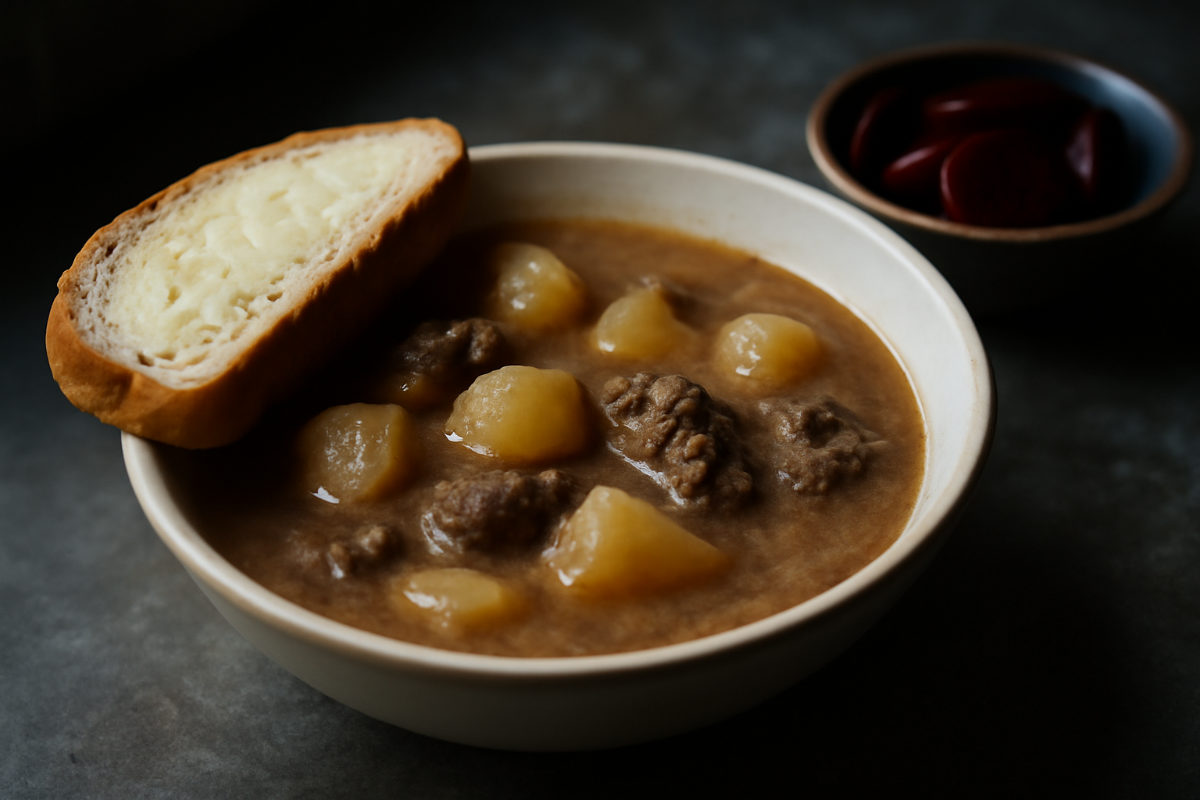
The thin, potato thickened liquor from a pan of scouse, made from lamb and beef with nothing added but time and a lot of onion.
- Contains meat
- liverpool
- scouse
- stew
- lamb
- no flour
- Prep
- 20 min
- Cook
- 2 hr 30 min
- Total
- 2 hr 50 min
- Serves
- 6
- Difficulty
- Easy
Scouse is the Liverpool stew the city gets its nickname from, a descendant of the sailors' lobscouse that came in through the docks. There is no flour in it. The gravy thickens because half the potatoes disappear into it over a couple of hours, and that is the whole technique. It should be somewhere between a stew and a soup, and it goes on the table with beetroot and red cabbage.
Ingredients
Makes about 1 litre of stew liquor, enough for six bowls
Scaled amounts are rounded to something you can actually measure. Season at the end and trust your mouth over the maths.
Kit
- Large heavy pot with a lid
- Wooden spoon
Method
Heat the dripping in a big pot and brown the lamb and beef in two batches over a high heat, about 5 minutes a batch, until the pieces have real colour on them. This is the only browning the dish gets, so make it count.
Add the onions and carrots, turn the heat down and cook for 10 minutes until the onions soften and lift the brown residue off the base.
Add the small diced potatoes, the stock, bay leaves and Worcestershire sauce. Bring to a boil, then drop to the barest simmer and cover.
Cook for 1½ hours, stirring every half hour. The small potatoes will start breaking down and clouding the liquid. That is the gravy forming, so do not fight it or try to keep the pieces whole.
Add the big potato chunks and cook uncovered for another 45 minutes. These are the ones that stay intact on the plate, and cooking them separately from the first lot is the whole trick to getting both texture and thickness.
Give it a good stir and press a few of the small potato pieces against the side of the pot with the spoon to thicken it further. The liquor should coat the meat loosely and pool around it, not set like a stew sauce.
Season with salt and a lot of white pepper. It needs more salt than you expect because there is no stock reduction and no flour carrying it. Rest it off the heat for 15 minutes before serving with beetroot, pickled red cabbage and crusty bread.
Tips worth knowing
- Floury potatoes only, Maris Piper or King Edward. Waxy ones hold their shape and you get a watery scouse with no body at all.
- Blind scouse is the version without meat, made when money was short. Use a strong vegetable stock, extra veg and a couple of teaspoons of Marmite, and it is a decent dish in its own right.
- Make it the day before. Scouse improves dramatically overnight and everyone in Liverpool will tell you the same.
- The beetroot is not a garnish. The vinegar cuts through the fat and it changes how the whole bowl tastes, so put it on the table.
Change it up
- Blind scouse: leave out the meat entirely, use vegetable stock, add a swede and two teaspoons of Marmite, and cook for 90 minutes total.
- Use all lamb neck for a sweeter, fattier version, or all beef shin for something deeper and more gelatinous.
- Add a handful of pearl barley with the first potatoes for a thicker, more filling pot.
Keeping and reheating
Keeps 3 days in the fridge and freezes for 3 months, though the potatoes soften further. Reheat slowly on the hob with a splash of water, since the liquor thickens a lot as it sits.
Questions people ask
What is the difference between scouse and stew?
Scouse has no flour and no thickener. The gravy comes entirely from potatoes breaking down into the liquid, which makes it thinner and cloudier than a typical stew, and it is usually made with a mix of lamb and beef.
Why is my scouse watery?
Either waxy potatoes, or they were not cooked long enough to break down. Add a diced floury potato and simmer uncovered for another twenty minutes, mashing a few pieces against the side of the pan as you go.
Do you serve scouse with beetroot or red cabbage?
Both are traditional and people are loyal to one or the other. Pickled beetroot is probably the more common in Liverpool, but pickled red cabbage does the same job of cutting the richness, so have whichever you like.