Two Meat Sunday Roast Gravy
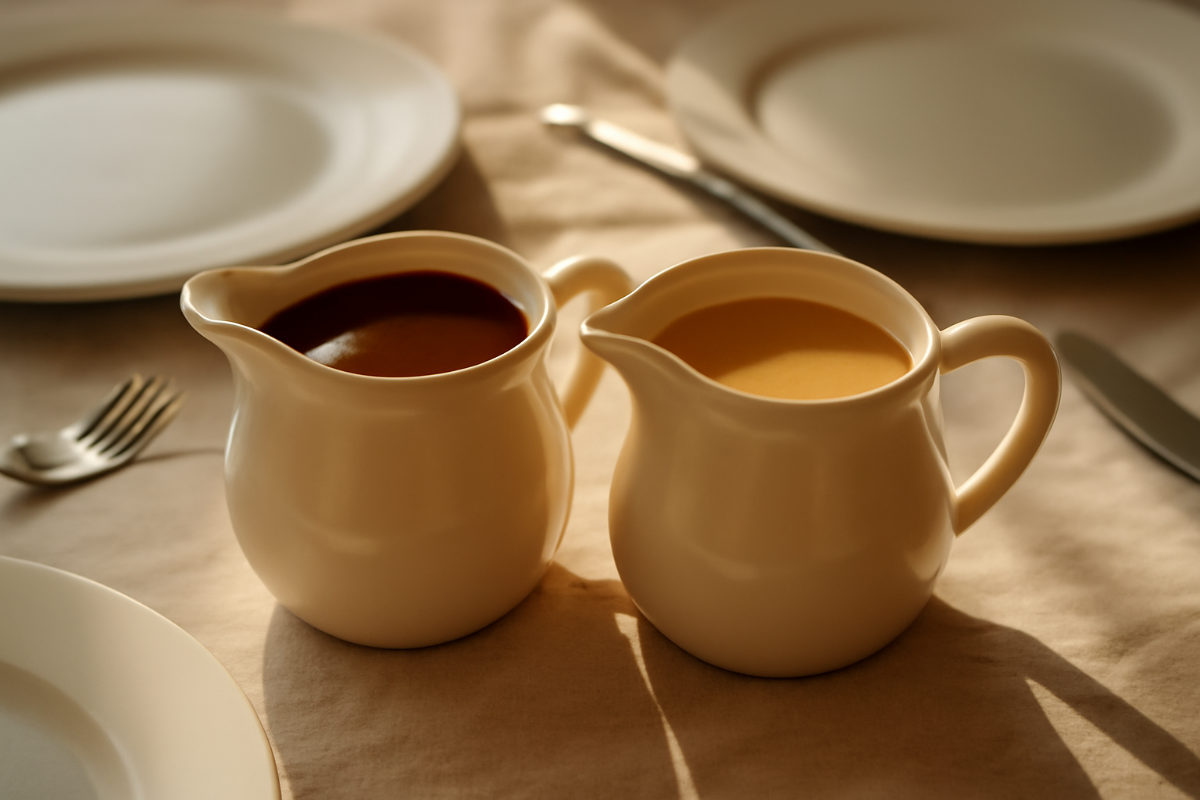
One neutral base gravy split into two jugs and finished differently, so beef and chicken on the same table each get the right sauce.
- Contains meat
- two meats
- beef
- chicken
- entertaining
- Prep
- 10 min
- Cook
- 30 min
- Total
- 40 min
- Serves
- 8
- Difficulty
- Medium
When there is beef for some and chicken for others, most people either make two gravies and lose the plot, or make one and it suits neither. The sensible answer is a single well made base that is deliberately neutral, split into two pans at the end and finished in two directions. It takes about six extra minutes.
Ingredients
Makes about 1 litre in total, two jugs of 500ml
Scaled amounts are rounded to something you can actually measure. Season at the end and trust your mouth over the maths.
Kit
- Large saucepan
- Two small saucepans
- Whisk
- Sieve
- Two jugs
Method
Make the base first, before either joint comes out. Melt the butter in a large saucepan and cook the onions gently for ten minutes until soft and pale gold. Stop before they go dark, since a heavily browned onion base would be too strong for the chicken side.
Stir in the flour and cook for two minutes to a light sandy roux. Again, keep it blond. You can always darken half of it later, but you cannot lighten it.
Add the hot chicken stock a third at a time, whisking smooth, drop in the bay leaf and simmer for fifteen minutes until it lightly coats a spoon. Strain it and you have a neutral base that will take either direction.
When the beef comes out, skim its tin, put it on the hob with the red wine and boil for three minutes, scraping up the residue. Add half the base gravy, the Marmite and a good grind of pepper.
Simmer the beef jug for five minutes to darken and deepen it. It should end up noticeably browner and more robust than what you started with.
Do the same with the chicken tin, skimmed, using a ladle of base to deglaze it, then tip that into a small pan with the rest of the base gravy.
Finish the chicken jug off the heat with the cold butter, the lemon juice and the herbs, which will keep it pale, glossy and fresh tasting.
Season each jug separately and label them, or use two obviously different jugs, because they look similar enough at the table that somebody will get it wrong.
Tips worth knowing
- Chicken stock is the right base for both. Beef stock is too assertive to be softened back down for poultry, but chicken stock takes darkening easily.
- Make the base up to a day ahead. On the day all you are doing is deglazing two tins and stirring in a few finishing ingredients.
- If one of the meats is lamb or pork, the same principle applies. Use mint and redcurrant for the lamb jug, or cider and mustard for the pork.
- Two small jugs also solve the problem of a vegetarian at the table. Hold back a third of the base before it meets either tin and finish it with soy sauce and mushroom.
Change it up
- For beef and lamb, finish one jug with red wine and Marmite and the other with rosemary and redcurrant jelly.
- Skip the wine entirely and darken the beef jug with a teaspoon of balsamic and an extra half teaspoon of Marmite.
- Make a third jug for a vegetarian guest by finishing base gravy made with vegetable stock with soy sauce and a spoon of mushroom ketchup.
Keeping and reheating
The base keeps four days in the fridge and freezes for three months, which is the whole point of making it separately. Once finished, each jug keeps three days, though the buttered chicken one is best fresh.
Questions people ask
Can you serve one gravy with two meats?
You can, and a plain chicken based gravy is the safest single option. But splitting it at the end costs six minutes and means the beef eaters get something dark and the chicken eaters get something light, which is a noticeably better plate.
Which gravy do I make if I am roasting beef and pork together?
Use a chicken stock base again, then finish one half with red wine and Marmite for the beef and the other with cider, mustard and sage for the pork. The base handles both directions without complaint.
How much gravy do I need for eight people?
About a litre in total, or 125ml a head, which is what this recipe makes. If you know your family go back for more, make a litre and a half and keep the surplus hot in a flask.