Pasta Water Gravy
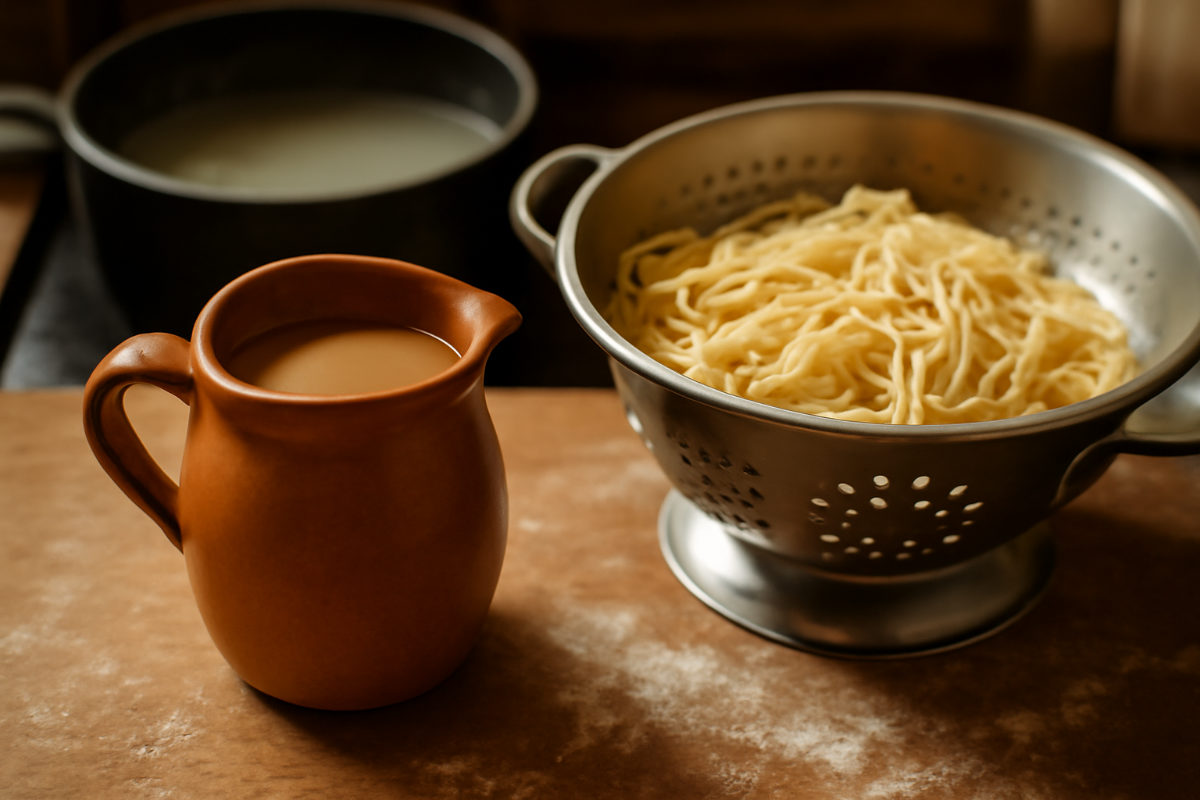
The cloudy, salty, starchy water you were about to tip down the sink makes a gravy with real body and needs less thickener than plain water.
- Vegetarian
- no waste
- starchy water
- weeknight
- clever
- Prep
- 2 min
- Cook
- 8 min
- Total
- 10 min
- Serves
- 4
- Difficulty
- Easy
Italian cooks have used pasta water to build sauces for a very long time, and there is no reason a British gravy cannot borrow the trick. The dissolved starch gives you body and a silky texture without any extra flour, and the water is already seasoned. It is not going to replace a stock based gravy on a Sunday, but on a weeknight when there is a pan of pasta water going cold it is free thickening.
Ingredients
Makes about 450ml, enough for four plates
Scaled amounts are rounded to something you can actually measure. Season at the end and trust your mouth over the maths.
Kit
- Saucepan
- Whisk
- Jug or mug for reserving water
Method
Before you drain the pasta, dip a mug into the pan and take out 400ml of the water. Do it at the end of cooking rather than the start, because the water gets progressively starchier as the pasta releases its surface starch. It should look cloudy, not clear.
Taste the water. This tells you exactly how much salt is already in the recipe and it varies enormously depending on how heavily you salted the pan. If it tastes like proper seawater, use half a stock cube instead of a whole one.
Melt the butter in a saucepan over a medium heat and add the garlic. Cook it gently for a minute until fragrant but still pale, since burnt garlic will dominate a gravy this simple.
Stir in the flour and cook for a minute. There is deliberately only one tablespoon here, because the starch already dissolved in the pasta water is doing part of the thickening for you.
Crumble in the stock cube, stir it into the paste, then pour in a third of the pasta water and whisk it smooth.
Add the rest of the water and bring it to a simmer. Cook for four minutes and watch it thicken. It will go glossier and silkier than a plain flour gravy does, which is the starch showing itself.
Finish off the heat with the soy sauce, lemon juice and black pepper. Taste before you add any salt, because between the pasta water and the cube there is a decent chance you are already there.
If it has not thickened enough, simmer another two minutes rather than adding more flour. Starch thickened liquids keep tightening as they reduce.
Tips worth knowing
- Only fresh pasta water works properly. Water from a pan that has been sitting cold for an hour has the same starch in it but has usually gone gluey and stale tasting.
- The starchiest water comes from small pasta shapes cooked in less water than usual. If you are planning this, cook the pasta in a smaller pan.
- Never salt the gravy before tasting the water. This is the single most common mistake with this method.
- Potato cooking water works the same way and is often even starchier, so if you have boiled potatoes rather than pasta, use that instead.
Change it up
- Add a tablespoon of grated parmesan off the heat for something closer to an Italian sauce, which suits chicken very well.
- Fry a chopped rasher of bacon with the garlic and skip the stock cube, using the bacon for salt and savour instead.
- Use the water from cooking gnocchi, which is the starchiest of the lot, for a noticeably silkier result.
Keeping and reheating
Three days in the fridge. It thickens a lot on cooling because of the double starch, so expect to add a good splash of water when reheating. Freezes for three months but the texture goes slightly claggy, so it is better fresh.
Questions people ask
Can you use pasta water to make gravy?
Yes. The dissolved starch gives body and a silky texture, and the water is already seasoned, so you need about half the usual flour. Taste the water first, because how salty it is decides how much stock cube you can get away with.
What does starchy water do in a sauce?
The starch molecules swell and thicken the liquid, and they also help fat and water stay emulsified so the sauce looks glossy rather than split. It is the reason Italian pasta sauces cling to the pasta instead of pooling at the bottom of the bowl.
Is potato water good for gravy?
Very good, and often better than pasta water because it is starchier still. Save the water from boiling potatoes for mash and use it as the liquid in your gravy. Just remember it may already be salted.