Onion Gravy with Sage
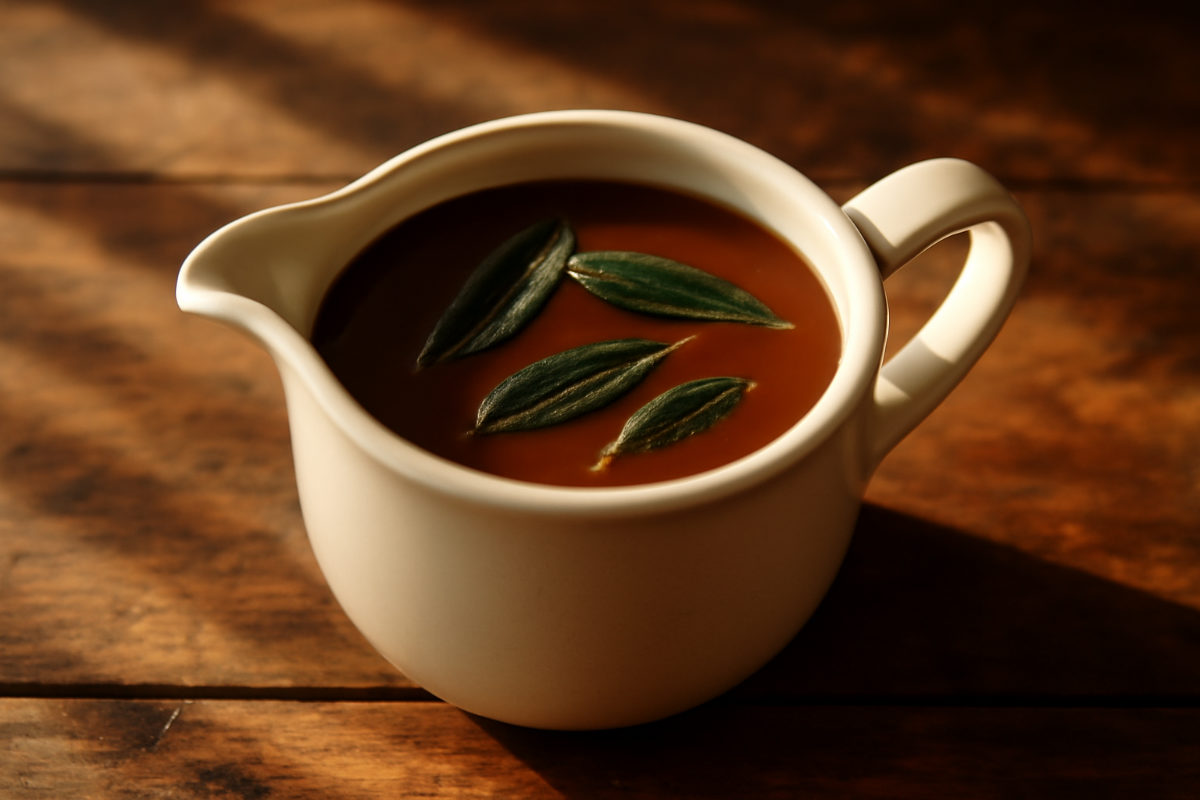
Sage leaves crisped in butter first and used two ways, half chopped into the gravy and half kept whole on top, over softly browned onions.
- Contains meat
- sage
- roast pork
- stuffing
- herby
- autumn
- Prep
- 10 min
- Cook
- 45 min
- Total
- 55 min
- Serves
- 6
- Difficulty
- Easy
Sage and onion is not just a stuffing flavour, it is one of the great British pairings and it belongs in a gravy. The trick here is frying the leaves in butter before anything else. It crisps them, it takes the slightly musty edge off raw sage, and it leaves you with sage flavoured butter to cook the onions in. Made for roast pork.
Ingredients
Makes about 550ml, enough for six plates
Scaled amounts are rounded to something you can actually measure. Season at the end and trust your mouth over the maths.
Kit
- Frying pan
- Slotted spoon
- Kitchen paper
- Whisk
Method
Melt the butter in a frying pan over a medium heat and, once it stops foaming, drop in all the sage leaves in a single layer. Fry them for 40 to 60 seconds until they go darker green, stop hissing and turn crisp. Lift them out with a slotted spoon onto kitchen paper.
Add the dripping to the sage butter left in the pan, then tip in the onions with a pinch of salt. Cook over a medium low heat for 30 minutes, stirring every few minutes, until soft and a good even brown.
While they cook, chop half the crisp sage leaves finely and set the rest aside whole for the top.
Stir the chopped sage and the flour into the onions and cook for 2 minutes, scraping the base.
Add the hot stock a third at a time, whisking each addition smooth before the next, then bring to a gentle simmer.
Simmer for 12 minutes until it thickens and the sage has spread through the whole gravy. Stir in the cider vinegar, which lifts sage in a way that nothing else quite does, then season.
Pour into a jug and crumble the reserved whole leaves over the top just before serving so some of them stay crisp.
Tips worth knowing
- Frying the sage is not decoration. Raw sage in a gravy tastes dusty and slightly medicinal, while fried sage goes nutty and mellow.
- Dried sage works in a pinch but use only a teaspoon and add it with the flour, since it is much stronger and does not fry.
- If you have roasted a pork joint, build this gravy in the roasting tin with the fat and scrapings instead of a clean pan and it doubles in quality.
- The vinegar at the end is small but noticeable. Sage without acid tastes flat, and a couple of teaspoons brings the whole thing into focus.
Change it up
- Add a peeled and grated Bramley apple with the stock and let it collapse for a sage and apple gravy that is very good with pork belly.
- Stir in 100g of cooked and crumbled sage and onion stuffing at the end for a thick, textured gravy that suits a Christmas turkey.
Keeping and reheating
Fridge for 4 days, freezer for 3 months. Fry a few fresh sage leaves to scatter on top after reheating, because the original crisp ones will have gone soft.
Questions people ask
Can I use dried sage in gravy?
Yes, but use about a third of the quantity, so a teaspoon here instead of twenty leaves. Add it with the flour so it has time to soften in the fat, and accept that you lose the crisp leaves on top, which are half the pleasure of the fresh version.
What meat goes with sage and onion gravy?
Roast pork first and foremost, then turkey, chicken, and pork sausages. Sage is a fatty meat herb, which is exactly why it ends up in stuffing, and the same logic applies to the gravy.
How do you stop sage tasting bitter in gravy?
Fry the leaves in butter for under a minute before anything else, and add a splash of acid at the end. Boiling raw sage for a long time is what makes it turn bitter and musty, so the flavour goes in as fried leaves rather than raw ones.