Fried Chicken Pan Gravy
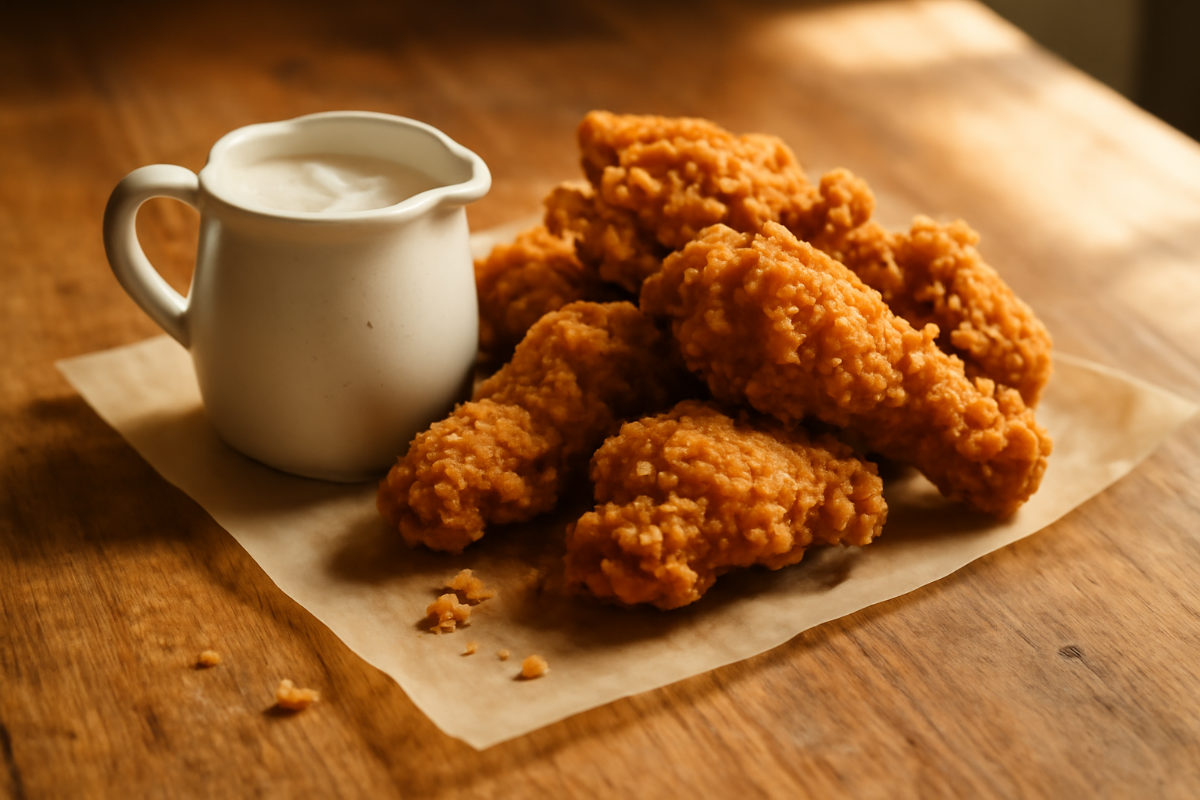
A cream enriched pan gravy made in the fat left from frying chicken, thick with crisp coating fragments and finished with a spoon of double cream.
- Contains meat
- fried chicken
- cream gravy
- pan gravy
- southern
- Prep
- 5 min
- Cook
- 12 min
- Total
- 17 min
- Serves
- 4
- Difficulty
- Medium
This is what you do with the pan after fried chicken, and it is the reason Southern cooks never wash it out straight away. The bottom of that pan is covered in fried coating and rendered chicken fat, which is a better base for gravy than any stock cube. A little cream at the end pushes it past a plain white gravy into something worth building a meal around.
Ingredients
Makes about 500ml, enough for four plates
Scaled amounts are rounded to something you can actually measure. Season at the end and trust your mouth over the maths.
Kit
- The frying pan used for the chicken
- Balloon whisk
- Heatproof jug
- Measuring jug
Method
Lift the fried chicken onto a wire rack over a tray and keep it warm in a low oven at 100C (fan 80C, gas ¼). A rack matters here, because a plate traps steam and softens the coating you spent time getting crisp.
Pour the frying oil out of the pan slowly into a heatproof jug, stopping when about four tablespoons are left. All the fried crumbs and stuck brown coating stay in the pan. Do not wash or wipe anything.
Set the pan over a medium heat. Scatter the flour in and whisk it through the fat and crumbs. It will look uneven and lumpy because of the fried bits, which is right.
Cook for two to three minutes, whisking and scraping the base hard, until the paste turns light golden brown and the fried scraps loosen into it. The pan is hot from frying so this happens faster than in a saucepan.
Pour in the hot chicken stock and whisk furiously. It will bubble up and thicken at once, lifting the last of the fond. Work it completely smooth before you go any further.
Add the warm milk in two goes, whisking each one in. Bring to a gentle simmer and cook for four to five minutes until it coats a spoon and no longer tastes of flour.
Take it off the heat, stir in the cream, then season with the black pepper, garlic granules and salt. Serve it in a jug alongside the chicken rather than poured over, so the coating stays crisp until the last moment.
Tips worth knowing
- Use some of the leftover seasoned dredging flour instead of plain flour. It already carries salt, pepper and paprika and it thickens exactly the same.
- Do not strain this gravy. The fried crumbs are the whole character of it, and a smooth version is just country white gravy with a chicken flavour.
- Serve it on the side. Fried chicken and gravy on the same plate for five minutes gives you soggy coating and disappointment.
- If the pan has any black burnt specks rather than brown ones, pick them out first. Burnt coating turns a whole batch bitter.
Change it up
- Add a finely chopped shallot and a sprig of thyme to the fat for a minute before the flour for a more aromatic gravy.
- Skip the milk entirely and use 450ml of chicken stock for a lighter, browner pan gravy that suits roast chicken as well as fried.
- Stir a tablespoon of hot sauce and a teaspoon of honey in at the end for a hot honey gravy that works well with buttermilk fried chicken.
Keeping and reheating
Best on the day. It keeps two days in the fridge and reheats with a splash of milk over a low heat, but the crisp fragments dissolve and you lose the texture. It does not freeze well.
Questions people ask
Can I make gravy from fried chicken oil?
Yes, that is exactly what this is. Keep about four tablespoons of the fat and every one of the browned crumbs in the pan, pour the rest off, and build a roux straight in it. The crumbs give it a flavour that no stock can match.
How much fat should I leave in the pan for gravy?
Roughly one tablespoon of fat for every seven or eight grams of flour. Four tablespoons to thirty grams is a good working ratio. Too much fat and the gravy goes greasy and splits, too little and it turns claggy and pasty.
Should I pour gravy over fried chicken?
Not in the kitchen. Serve it in a jug so people can pour it themselves at the table, or pour it onto the mashed potato beside the chicken. Gravy sitting on a fried coating turns it soft within a couple of minutes.