Vegan Onion Gravy
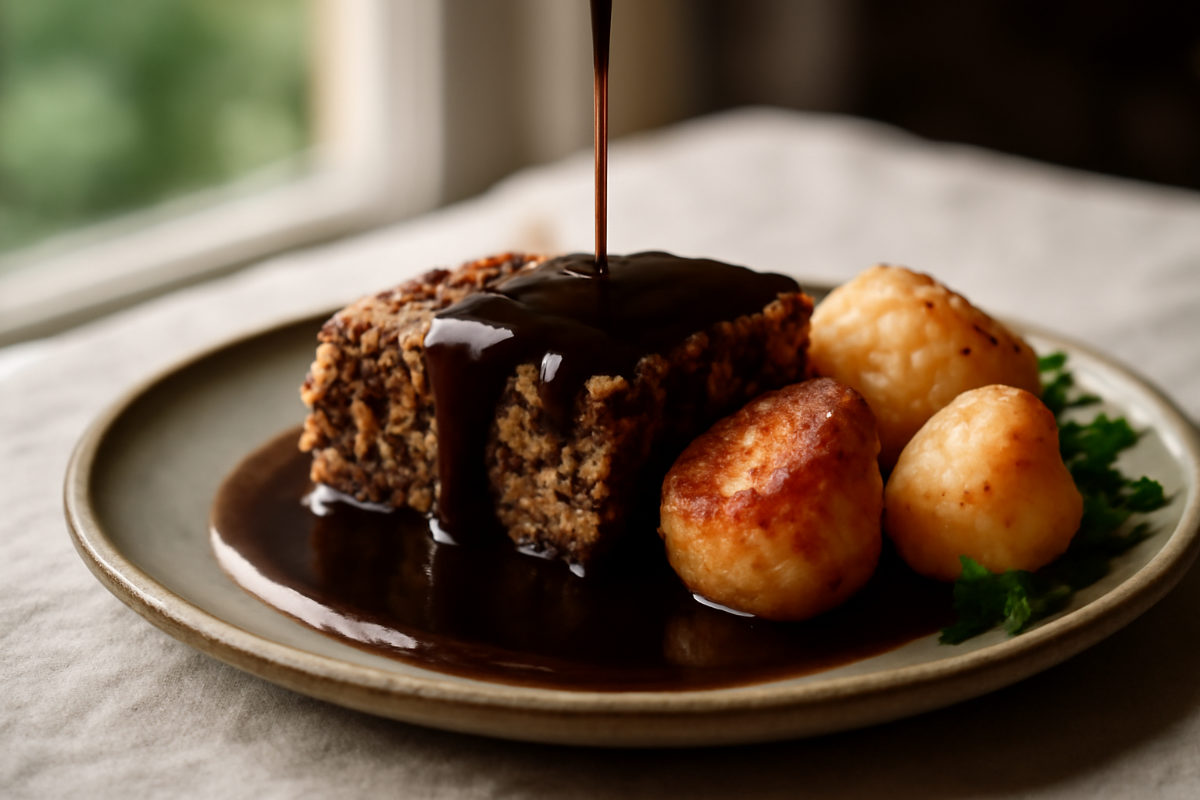
Onions caramelised in olive oil with a splash of soy sauce and a spoon of yeast extract for savoury weight, thickened with plain flour.
- Vegan
- Dairy free
- Vegetarian
- vegan
- dairy free
- nut roast
- umami
- plant based
- Prep
- 10 min
- Cook
- 50 min
- Total
- 1 hr
- Serves
- 6
- Difficulty
- Easy
The problem with most vegan gravies is that they taste thin, because there is no meat and no butter doing the heavy lifting. The answer is not more herbs, it is more umami and more caramelisation. Take the onions genuinely dark, add soy and yeast extract, and you get something with real weight that nobody will describe as the vegan option.
Ingredients
Makes about 600ml, enough for six plates
Scaled amounts are rounded to something you can actually measure. Season at the end and trust your mouth over the maths.
Kit
- Heavy saucepan
- Whisk
Method
Heat the oil in a heavy saucepan over a medium low heat, add the onions with a pinch of salt and cook for 35 minutes, stirring every few minutes. With no butter in the pan the browning is a touch slower, so give it the full time and take the onions to a genuine deep brown.
Add the garlic and cook for 1 minute, then stir in the tomato purée and fry it for another minute until it darkens and loses its raw smell. Tomato purée is doing quiet umami work here, not making the gravy taste of tomato.
Scatter over the flour and cook for 2 full minutes, stirring, so it toasts slightly in the oil.
Dissolve the yeast extract and soy sauce in a mugful of the hot stock, then pour that in while whisking. It thickens fast into a dark paste.
Add the rest of the stock in two more goes, whisking until smooth, then drop in the thyme sprigs and bring to a gentle simmer.
Simmer for 15 minutes, stirring occasionally. It will darken, thicken and lose any floury edge. Fish out the thyme, grind in black pepper and taste before adding salt, since the soy and yeast extract bring plenty.
If you want it smoother, blitz half of it with a stick blender and stir it back in. That gives you body without losing all the texture of the onions.
Tips worth knowing
- Three tablespoons of oil sounds like a lot but fat is what carries flavour, and without butter this gravy needs it. Skimp and it tastes watery.
- Tamari instead of soy keeps the umami and drops the wheat, though the flour still means this is not a gluten free recipe.
- A teaspoon of miso paste stirred in off the heat at the end adds another layer if you have a tub open.
- This is the best gravy in this collection for a nut roast, because it has enough savoury weight to stand up to one.
Change it up
- Add 100g of finely chopped chestnut mushrooms with the onions for the last fifteen minutes for even more depth.
- Swap the flour for 2 tablespoons of cornflour slaked in cold water and added at the end, and use tamari, for a gluten free version.
Keeping and reheating
Fridge for 5 days, freezer for 4 months. Reheat gently with a splash of stock, whisking as it loosens. It thickens noticeably overnight.
Questions people ask
How do you make vegan gravy taste rich?
Three things do most of the work. Caramelise the onions properly for at least half an hour, use enough oil, and layer in umami from soy sauce, yeast extract and tomato purée. Herbs alone will not get you there, and neither will a vegetable stock cube on its own.
Is vegan gravy gluten free?
Not this one as written, because it uses plain flour and standard soy sauce. Swap the flour for cornflour slaked in cold water, use tamari instead of soy, and choose a gluten free stock, and it becomes gluten free without losing anything.
What can I use instead of butter in onion gravy?
Olive oil works well and is what this recipe uses. A vegan butter block gives a slightly closer result to the dairy version, and refined coconut oil or a neutral oil like rapeseed are both fine. The important thing is to use enough of it.