Roast Pheasant Gravy
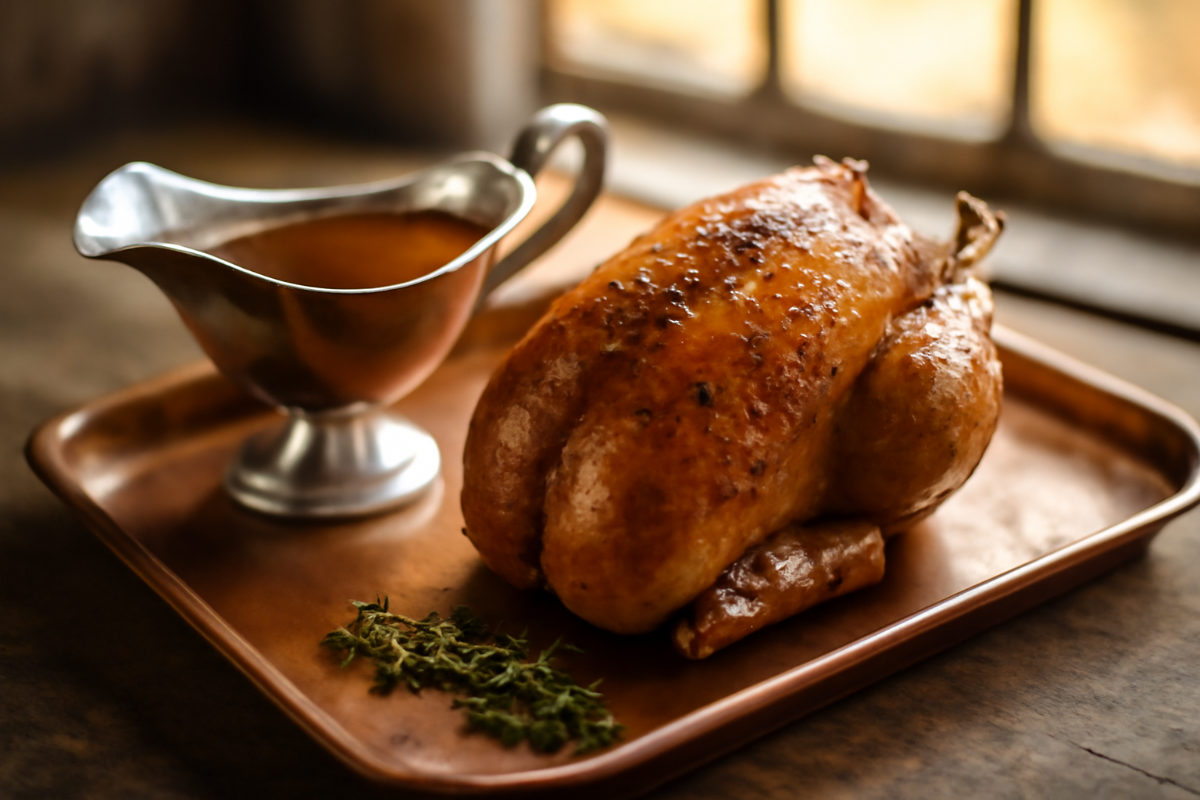
A light game gravy made with the pheasant legs and bones, bacon fat from the barding and a splash of Madeira.
- Contains meat
- pheasant
- game
- madeira
- shooting season
- Prep
- 10 min
- Cook
- 40 min
- Total
- 50 min
- Serves
- 4
- Difficulty
- Medium
Pheasant is a small, lean bird and the tin gives you very little to work with, so this gravy leans on the bird's own bones and the bacon usually laid over the breast. Roast the crown, take the legs off for stock, and you get a gravy with real game flavour in about forty minutes.
Ingredients
Makes about 350ml, enough for four plates
Scaled amounts are rounded to something you can actually measure. Season at the end and trust your mouth over the maths.
Kit
- Small roasting tin
- Saucepan
- Fine sieve
- Whisk
Method
Brown the chopped pheasant legs and neck in a dry hot pan for six or seven minutes until they take proper colour, then add the onion and celery and the chicken stock. Simmer for thirty minutes while the crown roasts, then strain. You should have about 500ml of concentrated game stock.
Roast the pheasant crown with the bacon over the breast at a high heat for around forty minutes, then lift it out and rest it for ten. Pheasant dries out mercilessly, so a hot fast roast and a short rest is the safest route.
Chop the roasted bacon finely and put it back in the tin with the fat and residue. Set the tin over a low heat and let the bacon crisp up for two minutes, scraping the base.
Sprinkle in the flour and stir it into the bacon fat for ninety seconds. There is little fat here, so add a small knob of butter if the flour looks dry and refuses to come together.
Pour in the Madeira and let it bubble for two minutes until the raw alcohol has cooked off and the tin is clean.
Add the hot game stock and the thyme, whisking as you go, then simmer for eight to ten minutes until it is glossy and lightly thickened. Keep it thinner than a beef gravy, since pheasant is delicate.
Stir in the jelly and let it dissolve. Taste. It should be savoury with a faint sweetness behind it, not sweet in itself.
Strain into a small warm jug, add the resting juices, then season with salt and a good amount of black pepper. Pheasant takes pepper well.
Tips worth knowing
- Take the legs off before roasting. They need longer cooking than the breast and they are more use in the stock pot than dried out on the plate.
- Bacon over the breast is not decoration, it bastes the bird and gives you the only real fat you will get for the gravy.
- Hen pheasants are smaller and more tender than cocks. If you are cooking a cock bird late in the season, expect a stronger flavour and lean on the jelly a little more.
- Watch for lead shot when you chop the carcass. Straining through a fine sieve catches anything you miss.
Change it up
- Add a handful of sliced chestnuts to the finished gravy for texture and sweetness.
- Swap the Madeira for port and add a strip of orange peel to the simmering stock.
- For a version without alcohol, use 75ml of strong black tea with a teaspoon of honey and an extra splash of sherry vinegar.
Keeping and reheating
Three days in the fridge, three months in the freezer. The game stock element freezes particularly well, so make double and keep half for the next bird.
Questions people ask
Can I use this gravy for partridge or grouse?
Yes. Partridge is milder so use a little less jelly, and grouse is much stronger so use more jelly and a splash more vinegar. The method is the same for any small game bird.
Do I need game stock or will chicken stock do?
Chicken stock alone makes a perfectly decent gravy but it tastes of chicken. Simmering the legs and neck in it for half an hour costs you nothing and turns it into something that tastes of pheasant.
Why is my pheasant gravy bitter?
Usually burnt bacon or a scorched tin. Pheasant roasts hot and fast, so the tin residue can catch. Keep an eye on it, and if the base is black rather than brown, make the gravy in a clean saucepan instead.