Pickle Brine Gravy
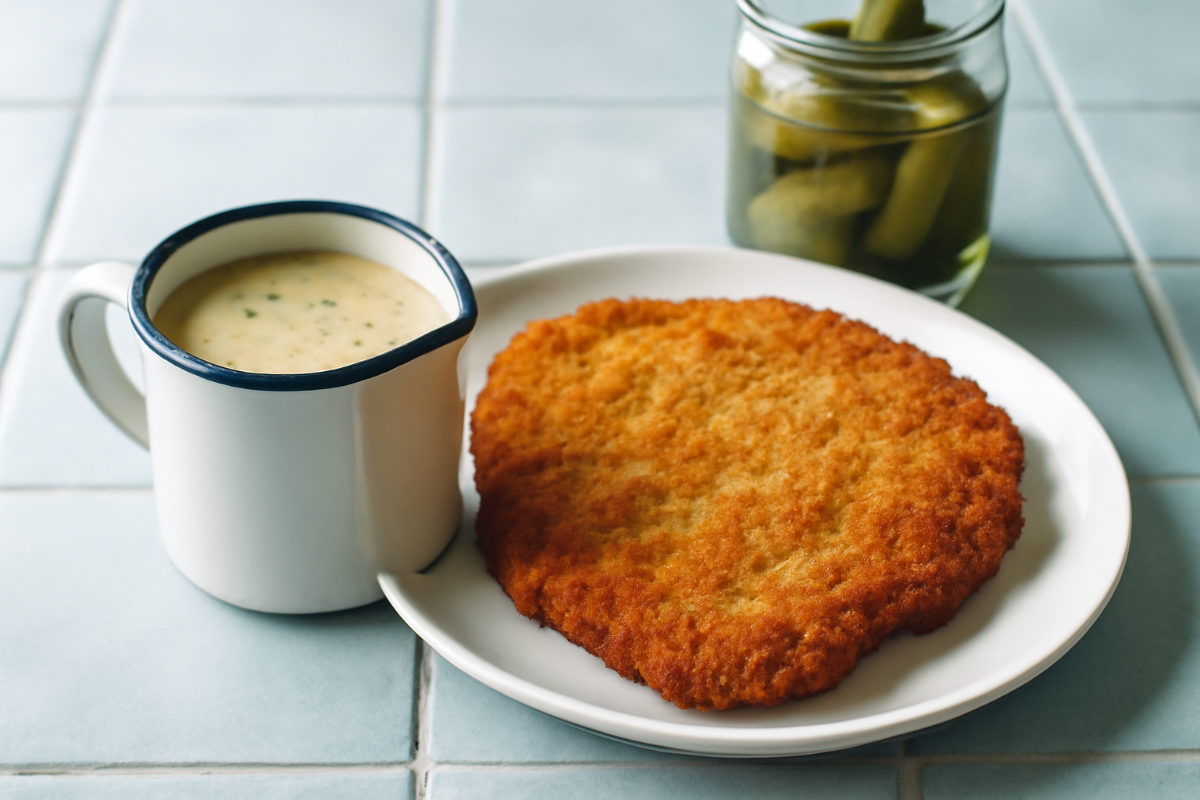
The vinegar from the bottom of a gherkin jar used in place of some of the stock, giving a sharp, dilly gravy that cuts straight through fried pork.
- Contains meat
- pickle
- sharp
- pork
- thrifty
- Prep
- 5 min
- Cook
- 15 min
- Total
- 20 min
- Serves
- 4
- Difficulty
- Easy
The brine at the bottom of a gherkin jar is seasoned vinegar with dill, mustard seed and garlic already in it, and throwing it away is a small waste. Used as about a fifth of the liquid in a gravy it gives you acidity and aromatics for nothing. This is the gravy for schnitzel, breaded pork, sausages or anything fried that needs cutting through.
Ingredients
Makes about 450ml, enough for four plates
Scaled amounts are rounded to something you can actually measure. Season at the end and trust your mouth over the maths.
Kit
- Frying pan or saucepan
- Balloon whisk
- Measuring jug
Method
Melt the butter in the pan over a medium heat, or if you have just fried pork in it, pour off all but about two tablespoons of the fat and leave the browned bits in place.
Add the shallot and cook for four minutes until soft and translucent. Scrape the base as you stir if there is anything stuck to it.
Stir in the flour and cook for a minute and a half, until it turns pale gold and smells toasted rather than raw.
Add the hot stock a third at a time, whisking each addition smooth before the next goes in. Bring to a simmer and cook for four minutes until it thickens.
Now add the pickle brine in a slow stream, whisking as it goes. Adding it after the gravy has thickened matters, because acid slows down the way flour thickens and you can end up with a thin gravy if it goes in early.
Stir in the sugar and let the gravy simmer for two more minutes to take the raw edge off the vinegar. It should smell sharp and dilly but not eye watering.
Taste before seasoning. Pickle brine is salty, so you may need none at all. Grind in black pepper, stir in the chopped gherkins if you want texture, and add the dill right at the end off the heat.
Tips worth knowing
- Eighty millilitres in a total of about 480ml of liquid is a fifth, which is the right ratio. Go to a third and the gravy tastes like warm vinegar and the flour struggles to hold it together.
- Add the brine after the gravy has thickened. Acid interferes with starch, and a gravy built with vinegar from the start will be noticeably thinner.
- Brine from sweet pickled gherkins is a different thing from dill pickle brine. If yours is the sweet sort, leave out the teaspoon of sugar entirely.
- The same trick works with the liquid from a jar of capers, pickled onions or jalapeños, though each brings its own character so taste as you go.
Change it up
- Stir in two tablespoons of soured cream off the heat for a version that sits somewhere between a gravy and a stroganoff sauce.
- Add a teaspoon of English mustard with the sugar for a much sharper gravy that goes well with a ham hock.
- Use the brine from a jar of jalapeños instead and finish with coriander for a hotter version to serve with fried chicken.
Keeping and reheating
Keeps four days in the fridge, and the acidity actually helps it keep. It freezes for two months but the dill goes limp, so add fresh herbs after reheating. Warm gently with a splash of stock.
Questions people ask
Can you use pickle juice in gravy?
Yes. Use it for about a fifth of the total liquid, so 80ml in a 480ml gravy, and add it after the gravy has thickened. It brings vinegar, salt, dill and mustard seed all at once, which is a lot of seasoning from something most people pour down the sink.
What does pickle gravy go with?
Anything fried or fatty. Breaded pork, schnitzel, sausages, fried chicken and a good pork chop all take it well. It is too sharp for a delicate roast chicken and it does not suit lamb at all.
Why did my gravy go thin when I added vinegar?
Acid weakens the thickening power of flour and cornflour. The fix is to build and thicken the gravy first and add the acidic liquid at the end, giving it a couple of minutes to warm through rather than a long simmer.