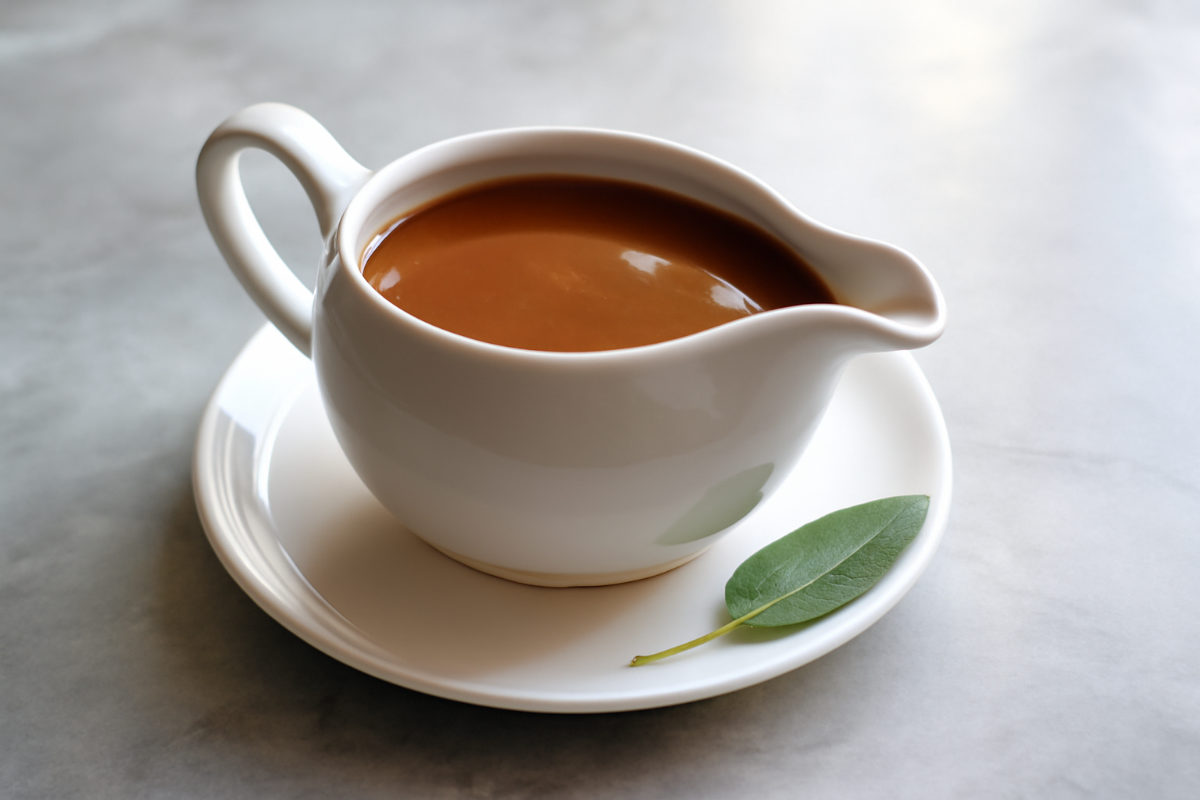
Gravy with Bisto and Fresh Herbs
Bisto made up as normal, then infused off the heat with a fistful of soft herbs and strained, which gives it a fresh top note it has never had in its life.
- Vegetarian
- bisto
- fresh herbs
- shortcut
- infusion
- Prep
- 3 min
- Cook
- 7 min
- Total
- 10 min
- Serves
- 4
- Difficulty
- Easy
Bisto tastes exactly like Bisto, which for a lot of people is the point. What it lacks is anything green or fresh, and that is the easiest thing in the world to fix. Steep herbs in it the way you would make tea, strain them out, and you get the familiar comfort with a lift on the finish. Works particularly well with chicken and with pork.
Ingredients
Makes about 450ml, enough for four plates
Scaled amounts are rounded to something you can actually measure. Season at the end and trust your mouth over the maths.
Kit
- Small saucepan
- Whisk
- Sieve
- Kettle
Method
Melt the butter in a small saucepan over a medium heat and add the sage leaves. Fry them for about forty seconds until they stop sizzling loudly and go slightly crisp at the edges. Frying sage in butter first turns it from grassy to nutty and is worth the extra minute.
Sprinkle in the granules and stir them through the butter for fifteen seconds so they are coated in fat.
Pour in the boiling water while whisking steadily. Granules seize in seconds, so keep the whisk moving until it is smooth and glossy.
Bring it up to a bare simmer for a minute, then take the pan off the heat entirely. Everything from here happens off the hob.
Drop in the parsley, stalks included, and the thyme sprigs. Press them under with the whisk so they are submerged. The stalks carry more flavour than the leaves, so do not throw them away.
Put a lid on and leave it to steep for four minutes. Any longer and the parsley starts to taste stewed and the colour goes muddy, any shorter and you will not taste it.
Strain the gravy through a sieve into a warm jug, pressing the herbs against the mesh with the back of a spoon to get everything out, then discard them.
Stir in the lemon juice and plenty of black pepper. Taste. Granules bring their own salt, so it almost never needs more.
Tips worth knowing
- Steep, do not boil. Soft herbs like parsley lose their fresh character within a couple of minutes of hard boiling and start tasting like hay.
- Woody herbs are the opposite. Thyme and rosemary can go in earlier and take more heat, so add them with the water if you want them more prominent.
- Save the herb stalks from anything else you are cooking and keep them in a bag in the freezer. They are perfect for this and cost nothing.
- The lemon juice at the end is not there to be tasted as lemon. It is there to make everything else taste sharper and more defined.
Change it up
- For lamb, swap the sage for rosemary and add a teaspoon of mint sauce along with the lemon juice.
- For chicken, use tarragon instead of sage and finish with a tablespoon of double cream.
- For a Christmas dinner version, add two crushed juniper berries and a strip of orange peel to the steep, then strain as usual.
Keeping and reheating
Three days in the fridge. The herb flavour fades noticeably after the first day, so if you are making it ahead, make the base ahead and do the steeping just before serving. Freezes for three months but expect to lose the fresh notes entirely.
Questions people ask
What herbs go in gravy?
Thyme, sage, rosemary and bay for the woody, savoury end, parsley for freshness, tarragon for chicken and mint for lamb. Woody herbs can be simmered, soft herbs should only be steeped off the heat or stirred in at the last second.
How can I make Bisto taste homemade?
Make it with less water than the packet says, build it on fried onion or fried herbs in butter, and finish with something acidic. Straining it also helps a lot, because a smooth strained gravy in a warm jug reads as homemade before anyone has tasted it.
Can you use dried herbs in gravy?
Yes, but treat them differently. Dried herbs need cooking in the liquid for a few minutes to soften and release, so add them with the water rather than steeping them at the end, and use about a third of the quantity you would use fresh.