Chestnut and Sage Gravy
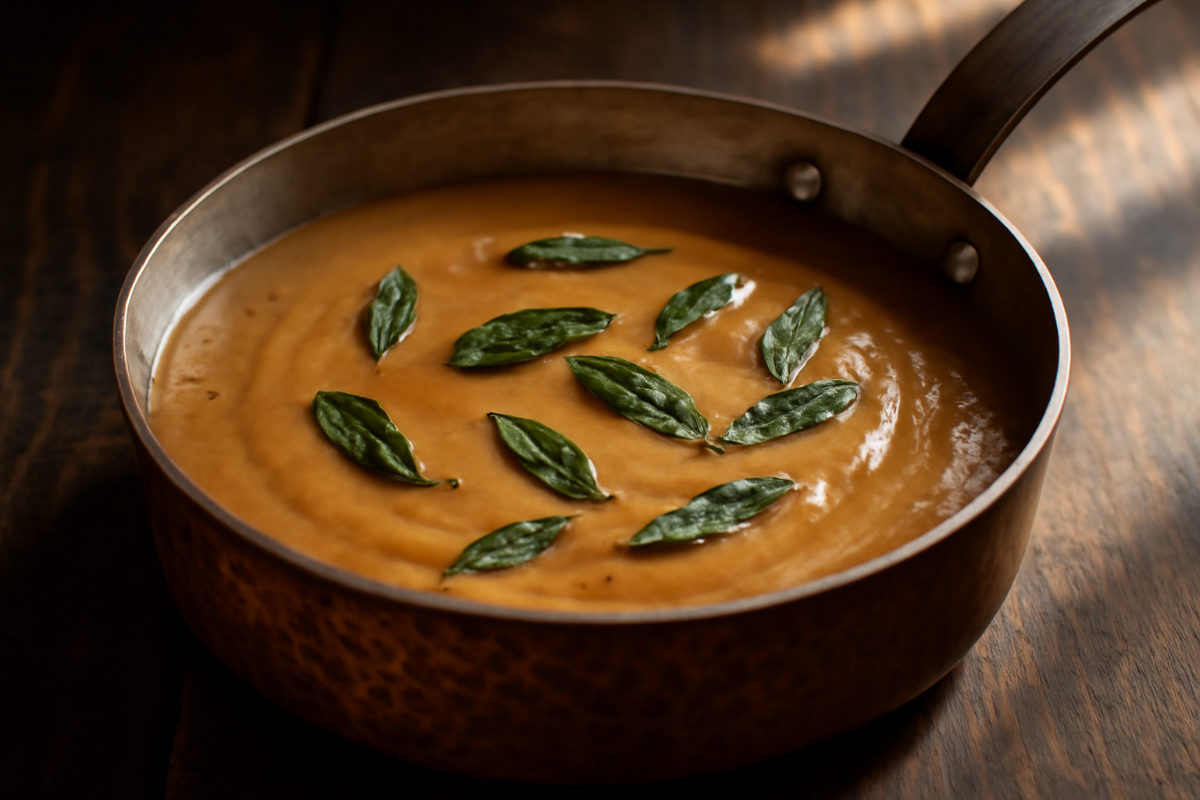
Cooked chestnuts browned in butter with sage until the leaves crisp, then blended into a sweet, nutty gravy with real body.
- Vegetarian
- chestnut
- sage
- christmas
- vegetarian
- Prep
- 10 min
- Cook
- 30 min
- Total
- 40 min
- Serves
- 6
- Difficulty
- Easy
Chestnuts are starchy rather than oily, so they thicken a gravy as they blend and give it a soft sweetness. Frying them hard in butter first is what stops it tasting like a puree, because you need the browning. Sage fried until crisp goes in with them. This is the gravy for a nut roast or a plate of roast parsnips.
Ingredients
Makes about 600ml, six servings
Scaled amounts are rounded to something you can actually measure. Season at the end and trust your mouth over the maths.
Kit
- Frying pan
- Saucepan
- Stick blender
Method
Melt the butter in a frying pan over a medium high heat. When it foams, add the sage leaves and fry for 30 to 40 seconds until they stop sizzling and go crisp. Lift six out onto kitchen paper to garnish and leave the rest in the pan.
Add the broken chestnuts to the same butter and fry for five minutes, stirring, until they have taken proper brown colour on their cut faces. This browning is where most of the savoury flavour comes from.
Turn the heat to medium, add the onion and cook for eight minutes until soft and golden, scraping the base as you go so nothing burns.
Add the garlic and cook for a minute, then splash in the balsamic and let it bubble away to almost nothing, lifting the sticky bits off the pan.
Pour in the stock, bring to a simmer and cook for 12 minutes uncovered. The chestnuts will soften right down and the liquid will reduce slightly.
Blend the whole lot smooth with a stick blender. Chestnuts thicken as they break up, so you may need to let it down with a little hot water or extra stock.
Return it to a low heat, stir in the mustard, taste and season well with salt and black pepper. Serve with the reserved crisp sage leaves crumbled over the top.
Tips worth knowing
- Vacuum packed cooked chestnuts are the sensible choice. Peeling raw ones is a job for people with more patience than sense.
- Fry the sage in properly hot butter and get it out quickly. Left in too long it turns bitter and black.
- Chestnuts are sweet, so this gravy needs more salt and more acid than a standard one to balance it out.
- Sweet chestnuts are not one of the fourteen UK regulated tree nut allergens, but anyone with a nut allergy will still want to know they are in there.
Change it up
- Make it vegan with a good block vegan butter, which behaves almost identically for frying the sage.
- Add 100ml of Madeira or dry sherry with the stock for a richer, more festive gravy, or extra stock with a teaspoon of balsamic if you want it alcohol free.
- Leave it unblended and just crush half the chestnuts against the side of the pan for a chunkier, more rustic sauce.
Keeping and reheating
Four days in the fridge and three months frozen. It thickens a great deal on chilling, so reheat with plenty of extra stock and whisk it smooth.
Questions people ask
Can I use chestnut puree instead of whole chestnuts?
Yes, use about 150g of unsweetened chestnut puree whisked into the stock. You will miss out on the browning though, so add an extra teaspoon of yeast extract or a splash of soy sauce for depth.
What goes with chestnut gravy?
Nut roast, roast parsnips, a mushroom wellington or a plate of Christmas dinner. It is sweet and nutty, so it suits anything with sprouts, sage or bread stuffing alongside.
Are chestnuts a nut allergen?
Sweet chestnuts are not on the UK list of fourteen regulated allergens, unlike almonds, cashews and hazelnuts. Even so, always tell guests with nut allergies that the gravy contains them.