Brown Sauce Gravy
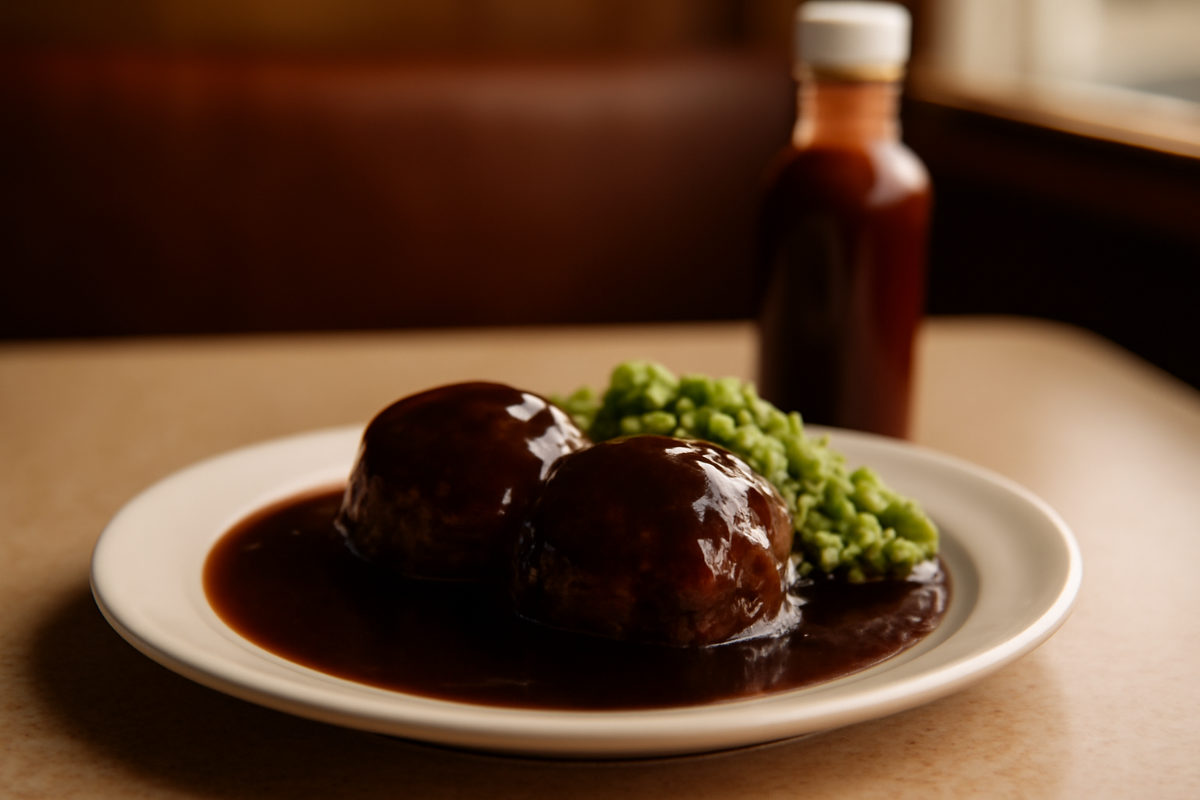
Two tablespoons of brown sauce whisked into an onion gravy, bringing tamarind, dates and malt vinegar in one go for a dark, tangy, very British result.
- Contains meat
- Dairy free
- brown sauce
- breakfast
- sausages
- tangy
- Prep
- 5 min
- Cook
- 20 min
- Total
- 25 min
- Serves
- 4
- Difficulty
- Easy
Brown sauce is tamarind, dates, molasses, malt vinegar and spices, which is close to a spice route in a bottle. Stirred into a gravy it gives a tang and a fruity depth that is hard to build any other way. This is the gravy for a bacon and sausage plate, faggots and peas, a full breakfast with a hangover, or anything with black pudding on it.
Ingredients
Makes about 450ml, enough for four plates
Scaled amounts are rounded to something you can actually measure. Season at the end and trust your mouth over the maths.
Kit
- Saucepan
- Wooden spoon
- Balloon whisk
Method
Heat the dripping in a saucepan over a medium heat. Add the onions with a pinch of salt and cook for fifteen minutes, stirring every couple of minutes, until they are soft, sweet and dark gold. This is most of the flavour so do not cut it short.
Scatter in the flour and stir it through the onions. Cook for a minute until everything looks coated and there is no dry flour left in the pan.
Pour in a third of the hot stock and whisk hard until the paste has smoothed out, then add the rest in two goes and bring it to a simmer.
Simmer for six minutes, stirring occasionally, until the gravy thickens and clings to a spoon.
Whisk in the brown sauce and the treacle if you are using it. The colour will deepen almost to black and the smell will change completely.
Give it two minutes at a low simmer so the vinegar in the sauce mellows a little. Any longer than about five minutes and you lose the tang that made you add it in the first place.
Season and taste. It should be dark, tangy and slightly fruity. If it tastes sour rather than tangy, a quarter teaspoon of sugar or another minute of simmering will settle it down.
Tips worth knowing
- Two tablespoons per 500ml is the measure. Three makes the gravy taste unmistakably of the bottle, which is fine on chips and wrong beside a roast.
- Most brown sauces contain barley malt vinegar and some contain wheat flour, so this gravy is not gluten free even if you swap the plain flour for cornflour.
- Onions cooked properly are what stop this tasting like a bottle of sauce mixed with stock. Fifteen minutes is a minimum, twenty is better.
- A teaspoon of black treacle darkens it beautifully but it is bitter, so do not be tempted to add two.
Change it up
- Add a chopped rasher of smoked bacon at the start with the onions for a smokier gravy that suits a breakfast plate.
- Use half brown sauce and half Worcestershire sauce for a sharper, saltier gravy for a cottage pie, which adds Fish as an allergen.
- Make it with vegetable stock and oil for a vegetarian version, and check the brown sauce label since most brands are suitable.
Keeping and reheating
Keeps five days in the fridge, helped along by the vinegar, and freezes for three months. Reheat gently with a splash of water. It usually wants another teaspoon of brown sauce after freezing to bring the tang back.
Questions people ask
Can you put HP sauce in gravy?
Yes, two tablespoons per 500ml. Brown sauce is built on tamarind, dates and malt vinegar, so it adds fruity acidity and depth in one move. Add it near the end and only simmer it briefly, or the tang cooks away.
Is brown sauce gravy gluten free?
No. Brown sauce is made with barley malt vinegar and some brands also include wheat flour, so it contains gluten regardless of what you thicken the gravy with. There are gluten free brown sauces available if you need one.
What goes with brown sauce gravy?
Sausages, faggots, black pudding, a bacon chop, liver and onions, or a full breakfast. It is a strong, tangy gravy that suits salty fatty food. It is too assertive for turkey or a delicate roast chicken.